
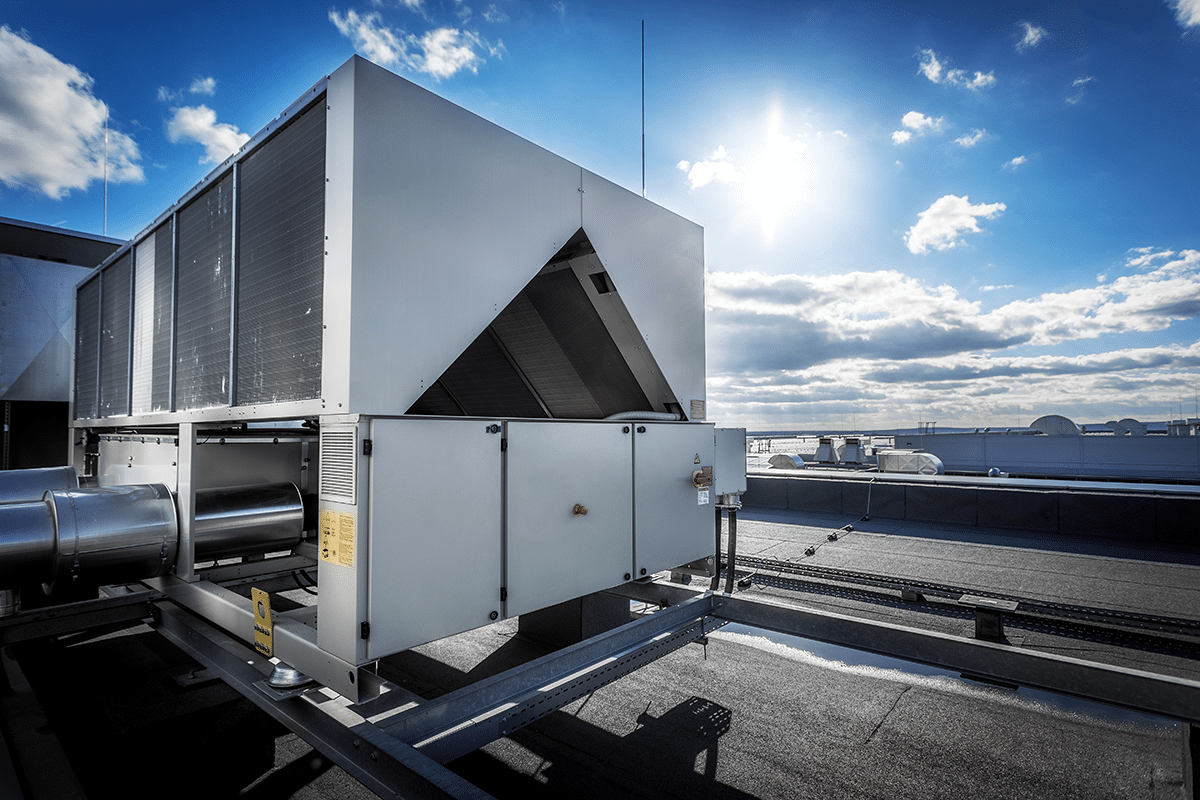
Your rooftop unit quit—or your service log says it will soon. Either way, you need a plan that keeps tenants comfortable and customers walking through the door. This guide walks facility managers and building owners through a commercial rooftop HVAC unit replacement, from the first roof walk to the crane lift and startup, and shows how Georgia Mechanical keeps downtime to a minimum.
Step 1: The Site Survey
Every replacement starts on the roof. A Georgia Mechanical technician records the nameplate data on your existing unit: tonnage, voltage, gas input, and airflow. Then the survey widens.
The technician checks the roof curb, ductwork connections, gas line, electrical disconnect, and condensate drain. They note where a crane can stand, how far it must reach, and what stands in the way. They also look at the unit itself. A corroded condenser coil, a cracked evaporator coil, or a tired compressor often tips the decision from repair to replace.
Age matters too. Most rooftop HVAC systems earn replacement after 15 years, once repair bills climb and efficiency drops. If your unit still runs on R-410A, leak repairs grow more expensive each year as supply tightens.
Step 2: Sizing and Selecting the New Unit
Do not copy the old tonnage. New lighting, a different tenant, added equipment, or a better roof can all change your load. Georgia Mechanical runs a load calculation so the new unit matches your building today.
From there, the team walks you through the choices that shape your energy costs for the next 15 years or more:
- Efficiency ratings. Smaller packaged units carry a SEER2 rating. Larger commercial rooftop units carry an IEER rating, which measures efficiency across part-load conditions where your unit spends most of its hours. High-efficiency rooftop units cost more upfront and pay you back every month on the utility bill.
- Compressor type. Scroll compressors run quietly and reliably, and staged models match output to demand. A variable-speed compressor goes further, ramping up and down in small steps to hold temperature steady and trim power use.
- Economizers. These pull in cool outdoor air when conditions allow, so the compressor rests during Georgia’s mild spring and fall days.
- Indoor air quality. Better filters and the right ventilation rate keep occupants comfortable and meet today’s tenants’ demands.
- Equipment line. Georgia Mechanical installs leading brands, including Daikin, and helps you weigh warranty terms, lead times, and service support.
- Heating type. Gas-electric RTUs remain the workhorse for commercial buildings. Gas-electric packaged rooftop units combine cooling, gas heat, and the blower in a single cabinet, which keeps the roof footprint small.
Refrigerant deserves its own line. New units ship with lower-GWP refrigerants, most commonly R-454B, which has a global warming potential of 466 versus 2,088 for R-410A. You cannot swap the new refrigerant into an old R-410A system, so refrigerant choice is another reason to replace the whole unit rather than patch a failing one.
Not sure a rooftop unit fits your building? Georgia Mechanical also designs and installs split systems when roof space, structure, or noise limits point that way.
Step 3: Curb Adapter, Roof Curb, and Permits
The roof curb is the steel frame that supports the unit and seals it to your roof. Manufacturers change footprints from model to model, so a new unit rarely drops onto an old curb. A curb adapter bridges the gap between the existing curb and the new unit, letting you keep your roof penetrations and ductwork in place. If the curb has rotted or the sizes differ too much, the crew sets a new roof curb and coordinates with your roofer to protect your roof warranty.
Permits come next. A rooftop unit installation typically needs mechanical, electrical, and gas permits from your local jurisdiction. Georgia Mechanical prepares and submits the paperwork, schedules inspections, and tracks approvals so nothing stalls the lift date.
Step 4: Scheduling Around Your Business Hours
A new unit takes weeks to arrive, and that lead time works in your favor. Georgia Mechanical uses that time to prepare, so roof work stays short.
- The crew orders the unit and curb adapter early and confirms delivery before booking the crane.
- Electricians and gas fitters complete as much pre-work as they can while the old unit still runs.
- Crane day falls on a weekend or early morning, when your building sits quiet.
- For restaurants, clinics, and retail stores that cannot go without cooling, the team discusses temporary cooling options before the work begins.
You decide what “minimal disruption” means for your operation, and the schedule follows.
Step 5: Crane Day
Crane day moves fast because the planning is done. The sequence looks like this:
- The crew shuts off power and gas and locks out the equipment.
- A certified technician recovers the refrigerant from the old unit in accordance with EPA rules.
- The crew disconnects the electrical, gas, and ductwork connections.
- The crane lifts the old unit off the curb and sets it on the ground or loads it onto a truck.
- The crew inspects the curb or adapter, seals it, and checks that it sits level.
- The crane sets the new unit, and the crew fastens it down and seals the seams.
- The crew reconnects the gas, electrical, condensate, and ductwork connections.
Replacing a single unit often takes about a day. Larger jobs with several units move in phases, so part of the building keeps its cooling while another section changes over.
Step 6: Startup and Commissioning
The job does not end when the crane leaves. The technician starts the unit and checks the refrigerant charge, compressor amp draw, gas pressure, airflow, and economizer operation. They confirm the controls talk to your thermostats or building automation system, install fresh filters, and walk you through the results. You get the unit, paperwork, and warranty details before the crew leaves the roof.
How Georgia Mechanical Keeps Downtime Short
Downtime shrinks when the surprises happen before crane day. Georgia Mechanical keeps it low with:
- A thorough survey that finds curb, ductwork, and electrical issues early
- Equipment ordered and staged before the old unit comes out
- A curb adapter ready to set the moment the old unit lifts away
- Pre-work completed while your current system still runs
- A crew that handles permits, the lift, and the startup under one roof
The Final Step: Maintenance That Protects Your Investment
A new rooftop unit earns its full lifespan only with regular care. A planned maintenance agreement keeps it there:
- Filters. Dirty filters choke airflow, raise energy costs, and hurt indoor air quality. Plan to change them every 1 to 3 months.
- Coils. Clean condenser and evaporator coils move heat efficiently. Dirt and debris force the compressor to work harder.
- Compressor and refrigerant. Technicians check amp draw, pressures, and signs of leaks so small problems don’t grow into failures.
- Economizers. Dampers stick, and sensors drift. Testing them each season keeps free cooling working.
- Belts, motors, and drains. Quick inspections catch wear before it shuts you down on the hottest day of the year.
Buildings with light commercial rooftops and larger rooftop HVAC units benefit just as much. A unit checked twice a year commonly runs well past 15 years and burns less energy along the way.
Frequently Asked Questions
How long does a rooftop HVAC unit replacement take?
Equipment lead time drives the calendar. Once the unit arrives, installing a single rooftop unit typically takes about a day.
Can I reuse my existing roof curb?
Often yes. A curb adapter lets a new unit sit on an existing curb when the footprint differs. A survey confirms whether your curb passes inspection.
Do light commercial buildings need a different approach?
The steps stay the same, but light commercial buildings often use smaller RTUs, so crane and scheduling needs shrink while the survey and sizing still matter.
Plan Your Rooftop Unit Replacement With Georgia Mechanical
Georgia Mechanical serves facility managers and building owners across Georgia with commercial HVAC installation, replacement, and maintenance. Schedule a site survey, and your team gets a clear scope, a firm schedule, and a replacement plan built around your business hours. Request a quote today.