
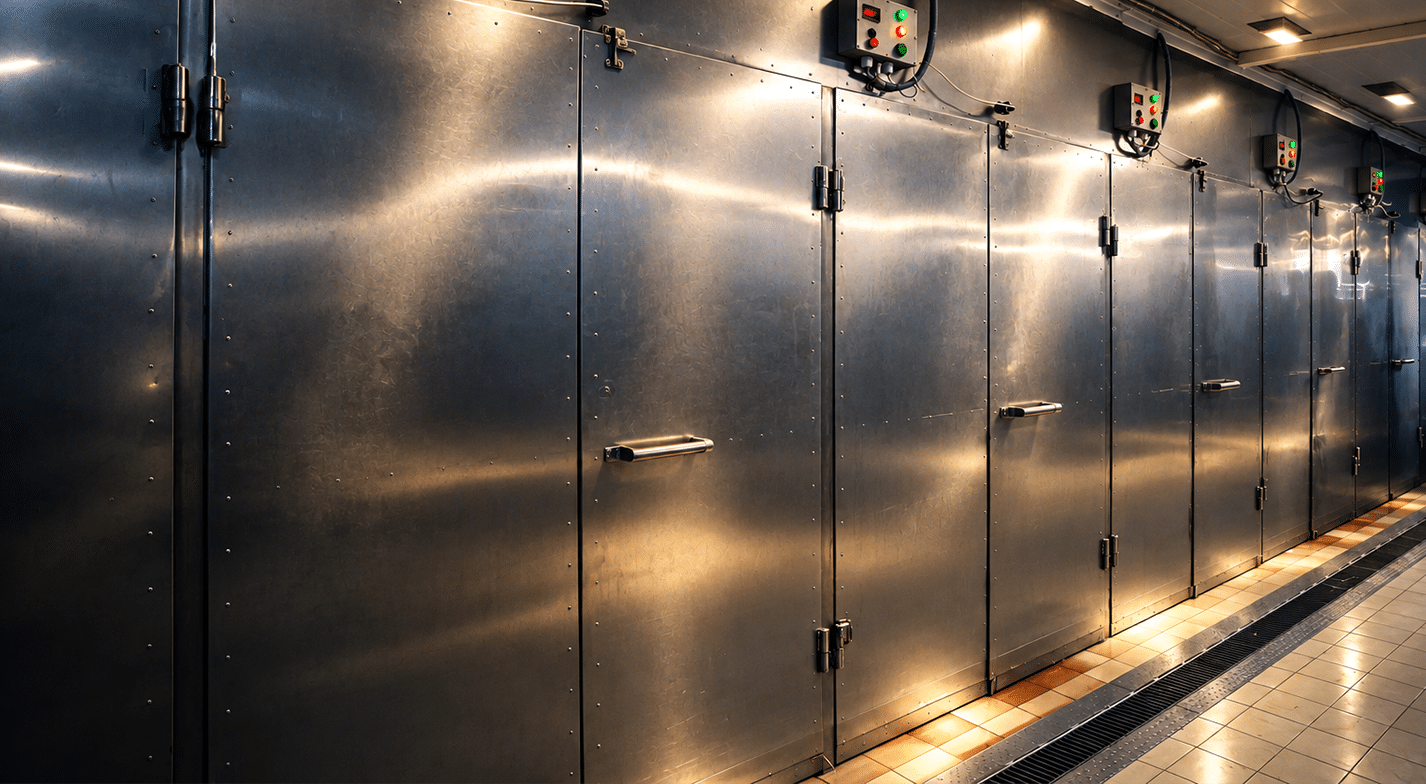
A malfunctioning walk-in freezer or walk-in cooler in a commercial kitchen, restaurant, or grocery store is more than just a minor inconvenience—it is an urgent risk to thousands of dollars in perishable inventory. When ambient temperatures rise or critical components fail, keeping your cold storage environment within strict health code specifications becomes a race against time.
At Georgia Mechanical, we provide comprehensive commercial refrigeration services designed to keep your refrigeration equipment running efficiently year-round. Understanding how your walk-in cooler and freezer repair needs arise—and knowing how to address them quickly—is essential for any business relying on heavy-duty commercial refrigeration systems.
Common Signs Your Walk-In Freezer Needs Immediate Repair
Refrigeration units rarely fail without warning. Spotting the early indicators of system distress allows you to schedule commercial refrigeration repair before experiencing catastrophic product loss or total system failure.
1. Excessive Ice Buildup
Frost accumulating on walls, ceilings, or the evaporator coil indicates an issue within the defrost system. This often stems from a faulty defrost timer, a blown defrost heater, or worn door gaskets allowing warm, humid air to enter the cold storage area.
2. Inconsistent Temperatures or Warming
If your walk-in refrigerator or freezer struggles to maintain set temperatures, the issue could range from clogged airflow to serious sealed-system faults. Pay close attention to fluctuations in the temperature display throughout the business day.
3. Strange Noises from the Condensing Unit
Worn fan motors, loose components, or a failing compressor often produce loud squealing, knocking, or buzzing sounds. Rattling near the condensing unit warrants immediate inspection by a technician.
4. Water Leaks Around the Unit
Standing water inside or outside your walk-in cooler usually indicates clogged drain lines, a malfunctioning evaporator drain pan, or humidity control issues.
5. Spike in Energy Bills
When commercial refrigeration systems work twice as hard to maintain set points, electric bills skyrocket. Clogged condenser coils, low refrigerant levels, or failing electrical components force the unit to run continuously.
Key Components of Walk-In Refrigeration Equipment
Understanding the basic anatomy of your refrigeration unit helps facilities managers communicate effectively with technicians during service calls and pinpoint issues early before severe damage occurs:
- Compressor: The primary pump that circulates refrigerant through the system under high pressure. Symptoms of failure include loud knocking noises, failure to cool, or repeatedly tripped circuit breakers. Repairs typically range from electrical relay replacements to full compressor replacement.
- Condenser Coil: Responsible for releasing heat absorbed from inside the unit into the exterior environment. Clogged or dirty coils cause the unit to overheat, resulting in elevated cabinet temperatures. Maintenance requires deep chemical coil cleaning and the removal of airflow restrictions.
- Evaporator Fan: Essential for circulating cold air across the evaporator coils and throughout the interior cabinet. When an evaporator fan fails, you will notice restricted airflow, heavy frost buildup on coils, and rising humidity. Technicians typically replace fan motors or realign fan blades.
- Defrost System: Automatically melts frost buildup off the coils on a programmed cycle. Symptoms of failure include heavy ice buildup on walls, frozen drain lines, and high cabinet temperatures. Servicing involves repairing or replacing defrost timers, heating elements, or termination thermostats.
- Sealed System: The continuous closed loop containing pressurized refrigerant essential for heat exchange. Symptoms of a leak or restriction include continuous motor operation, a gradual loss of cooling capacity, and trace oil along the line sets. Repairs require leak detection, line brazing, and refrigerant recharging.
The Core Causes of Compressor Failures
The compressor is the heart of any commercial refrigeration setup. When a compressor fails, cooling stops entirely, putting your inventory at immediate risk. Understanding why compressors break down helps prevent costly compressor replacement scenarios:
- Refrigerant Leaks: Operating a unit with low refrigerant forces the compressor to work continuously without adequate lubrication and cooling, leading to severe overheating and motor burnout.
- Dirty Condenser Coils: Dust, grease, and ambient debris buildup on the outdoor or remote condenser restrict heat discharge, forcing high head pressures back onto the compressor motor.
- Electrical Voltage Fluctuations: Power surges, loose wiring connections, or worn contactors can cause single-phasing or electrical shorts inside the compressor assembly.
- Liquid Slugging: If the evaporator fan fails or liquid refrigerant does not fully evaporate in the suction line, liquid flows back into the compressor, destroying internal valves and pistons.
Comprehensive Preventative Maintenance Checklist
Proactive care dramatically extends the operational lifespan of commercial refrigeration equipment while cutting emergency repair costs. Implementing a structured preventative maintenance program ensures optimal performance across all units, from large grocery store walk-in freezers to specialized commercial kitchen setups.
Monthly Maintenance Tasks
- Inspect door gaskets around the entire perimeter for cracks, tears, or air gaps.
- Clean and clear walk-in door sweep seals to ensure an airtight seal at floor level.
- Check the interior LED lights, safety releases, and automatic door-closing mechanisms.
- Verify setpoint temperatures using calibrated independent thermometers inside the space.
- Inspect drain lines and drain pans to prevent standing water and ice formation.
Quarterly Maintenance Tasks
- Perform a thorough chemical cleaning on the condenser and evaporator coils.
- Inspect all fan motors and lubricate bearings where applicable.
- Test defrost system cycles, checking heater amp draws and termination settings.
- Inspect electrical connections, contactors, and relays for burn marks or thermal wear.
- Evaluate refrigerant levels and inspect lines for trace oil indicating refrigerant leaks.
Specialized Refrigeration Needs: From Wine Coolers to Ice Machines
A fully functional commercial kitchen relies on several types of cooling systems working together seamlessly. Beyond standard walk-in cooler and freezer repair, Georgia Mechanical delivers full-spectrum commercial refrigeration services across various specialized appliances:
Ice Machine Repair
Ice makers require precise water flow control and timed freeze-thaw cycles. Clogged water filters, scale buildup on evaporator plates, or harvest valve failures can halt ice production entirely. Regular descaling and sanitizing cycles keep ice production clear, efficient, and sanitary.
Wine Cooler Repair
Wine storage demands precise temperature and humidity control to protect valuable vintages from spoilage. Whether servicing built-in commercial wine display cabinets or dedicated walk-in wine vaults, keeping high-precision sensors, dual-zone thermostats, and low-vibration compressors in top condition is essential.
Commercial Reach-In & Specialized Appliance Repair
From multi-door display cases in grocery stores to reach-in units manufactured by leading commercial brands like Nor-Lake, Whirlpool, or Samsung, proper care of sealed systems, digital electronic controllers, and door hardware ensures smooth daily operations across your entire business.
Why Professional Commercial Refrigeration Repair Matters
Attempting DIY repairs or hiring unqualified handymen for complex commercial freezer repair jobs often leads to compounded damage, voided manufacturer warranties, and prolonged downtime.
Environmental & Regulatory Compliance
Modern commercial refrigeration services require EPA certification to handle and recover refrigerants safely. Unqualified handling of sealed system lines risks environmental contamination and severe federal regulatory fines.
Same Day Repair Minimizes Loss
When a walk-in freezer fails, every hour counts. Working with a dedicated service team offering same-day repair ensures fast diagnostics, rapid sourcing of OEM parts, and immediate restoration of target temperatures before inventory spoils.
Diagnostic Accuracy
Commercial equipment uses sophisticated digital controllers, electronic expansion valves, and variable-speed fan motors. Certified technicians use specialized pressure gauges, electronic leak detectors, and diagnostic software to pinpoint root causes quickly, rather than blindly replacing parts.
Schedule Expert Commercial Refrigeration Services with Georgia Mechanical
Whether you require emergency walk-in refrigerator repair, a routine compressor check, specialized appliance repair, or a structured preventative maintenance contract, Georgia Mechanical provides prompt, reliable solutions tailored to your business needs.
Contact our commercial refrigeration team today to schedule an inspection or request rapid-response service for your commercial kitchen, restaurant, or cold storage facility.